Fabrics

Finishes and Characteristics

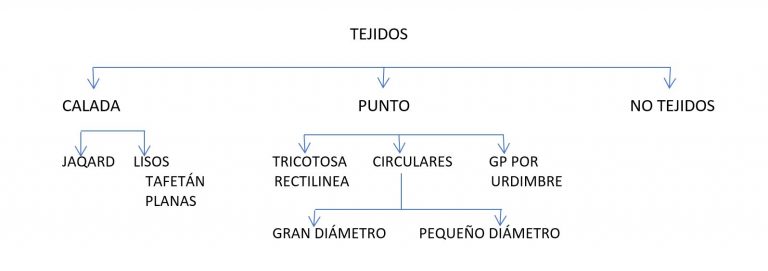
Fabrics can be classified as follows:

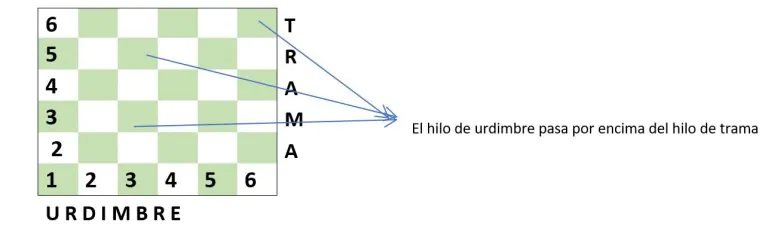
Woven fabrics are formed by passes of yarn in a transverse direction to the warp (yarns placed longitudinally).

Knitted fabrics are formed by yarns in the form of a mesh.

Non-woven fabrics are formed from webs.

The weave is the form or structure in which the yarns are woven to form the desired fabric.

Warp refers to the yarns placed longitudinally, and the weft refers to those that are interlaced horizontally.

Weaves can be simple (fundamental and derived) or compound. The fundamental weaves are those known as plain, twill, and satin, each having its own derivatives.

The plain weave has a 1-1 structure, making it the simplest weave. If we look at the fabric from one side and the other, we will see that it is identical.

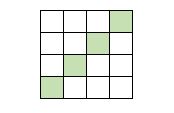
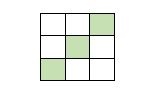
The most commonly used structure for twill is 2-1 or 3-1, which means that 2 or 3 weft yarns pass over the warp, and only one warp yarn passes over the weft.

For their part, satins must meet the following conditions:

  • The warp and weft yarns can be any number except unity.
  • The number of warp and weft yarns cannot be equal.

Here are some examples of satins:

Satin 5: 3-2; Satin 6 does not exist since it would be 3-3 and the numbers cannot be equal; Satin 7: 5-2 or 4-3; Satin 8: 5-3; Satin 9: 7-2 or 5-4….

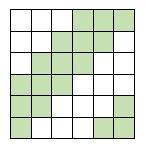
There are different simple and derived weaves. Here we show you the BATAVIA twill, one of the most commonly used derived twills.

Shopping Cart (0 items)