Our History

  • +
      270 años

    + 270 años - Hablamos de 270 años de empresa familiar textil

    Hablamos de 270 años de empresa familiar textil Desde la hilatura, pasando por la tejeduría, tintura, y acabados, hasta llegar a la fabricación propia + externalizada y, por supuesto, el comercio y distribución. Siempre vinculados a Valencia, y a su Colegio del Arte Mayor de la Seda (en adelante CAMS).

  • 1746
       

    1746 - 1746

    Vicente Orduña Pérez (1ª generación), sin ascendencia anterior en el gremio de Veluters, inicia su formación como aprendiz de tejedor de seda.

  • 1751
       

    1751 - 1751

    Vicente Orduña Pérez alcanza la categoría de Oficial, y continua su formación.

  • 1755
       

    1755 - 1755

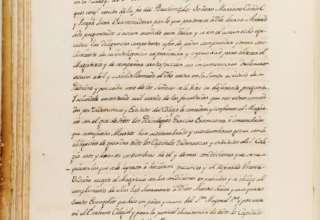
    Vicente Orduña Pérez adquiere la categoría de Maestro Tejedor de Damasco, y Maestro Terciopelero de seda. Desde este momento las ordenanzas gremiales le permiten tener taller propio.

  • 1766
       

    1766 - 1766

    Pendiente de acreditación documental, se cita como año de constitución de la primera sociedad mercantil de la familia Orduña.

  • 1789
       

    1789 - 1789

    Vicente Orduña Laques (2ª generación), como su padre, adquiere el magisterio de Tejedor de Damasco.

  • 1806
       

    1806 - 1806

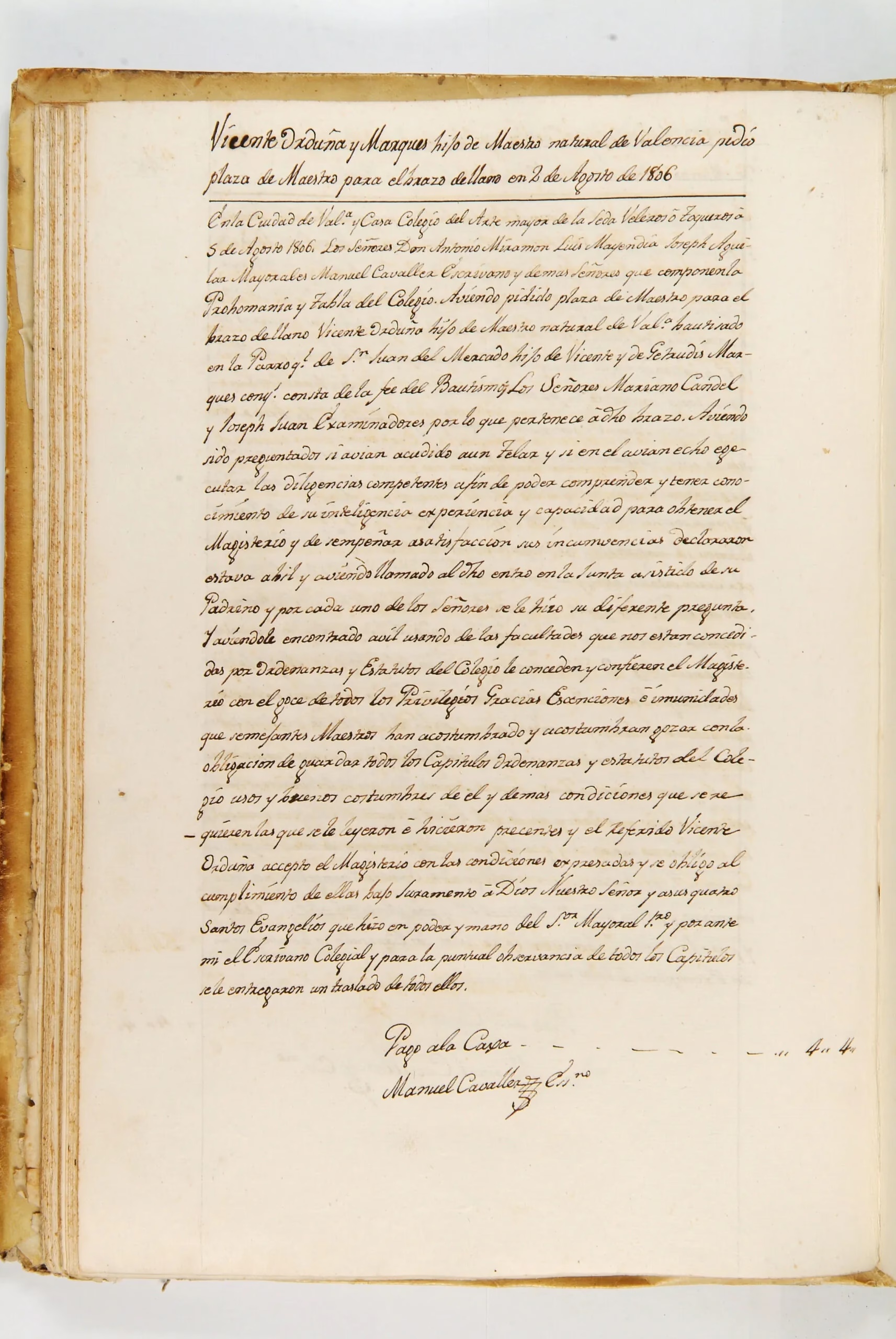
    Vicente Orduña Marqués (3ª generación) adquiere la condición de Maestro, en el Brazo de Llano. Compra de una prensa de tejidos de seda.

  • 1834
       

    1834 - 1834

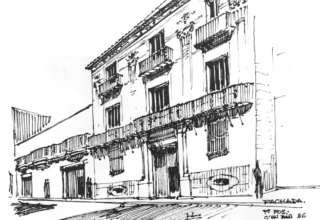
    Compra de la casa-taller palacio de D. Joaquín Manuel Fos, a su hijo Joaquín Fos Ferraro sito en la calle de En Bany, 36 del barrio de Velluters.

  • 1850
       

    1850 - 1850

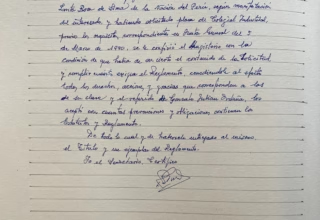
    Compra de la casa de la calle del Triador, números 1, 2 y 3, con el fin de ampliar la fábrica de tejidos de seda. Participación de la empresa de “Vicente Orduña e hijo” en la exposición nacional de los productos de la industria española realizada en Madrid, en la que fue distinguida con una […]

  • 1851
       

    1851 - 1851

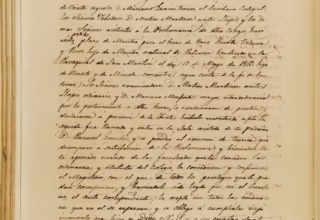
    Vicente Orduña Pérez (4ª generación) adquiere, junto con sus hermanos, la condición de Maestro. Participación de la empresa de “Vicente Orduña” en la primera Exposición Universal realizada en Londres, en la que fue distinguida con una medalla en la sección XIII, integrada por los géneros de seda y terciopelo.

  • 1854
       

    1854 - 1854

    Constitución de la nueva compañía de “Don Vicente Orduña e hijos”

  • 1855
       

    1855 - 1855

    Examen como Maestros de los hermanos Ricardo y Ángel Orduña Cebrián (5ª generación)

  • 1856
       

    1856 - 1856

    “Don Vicente Orduña e hijos” adquiere la hilatura de seda existente en Quart de Poblet

  • 1874
       

    1874 - 1874

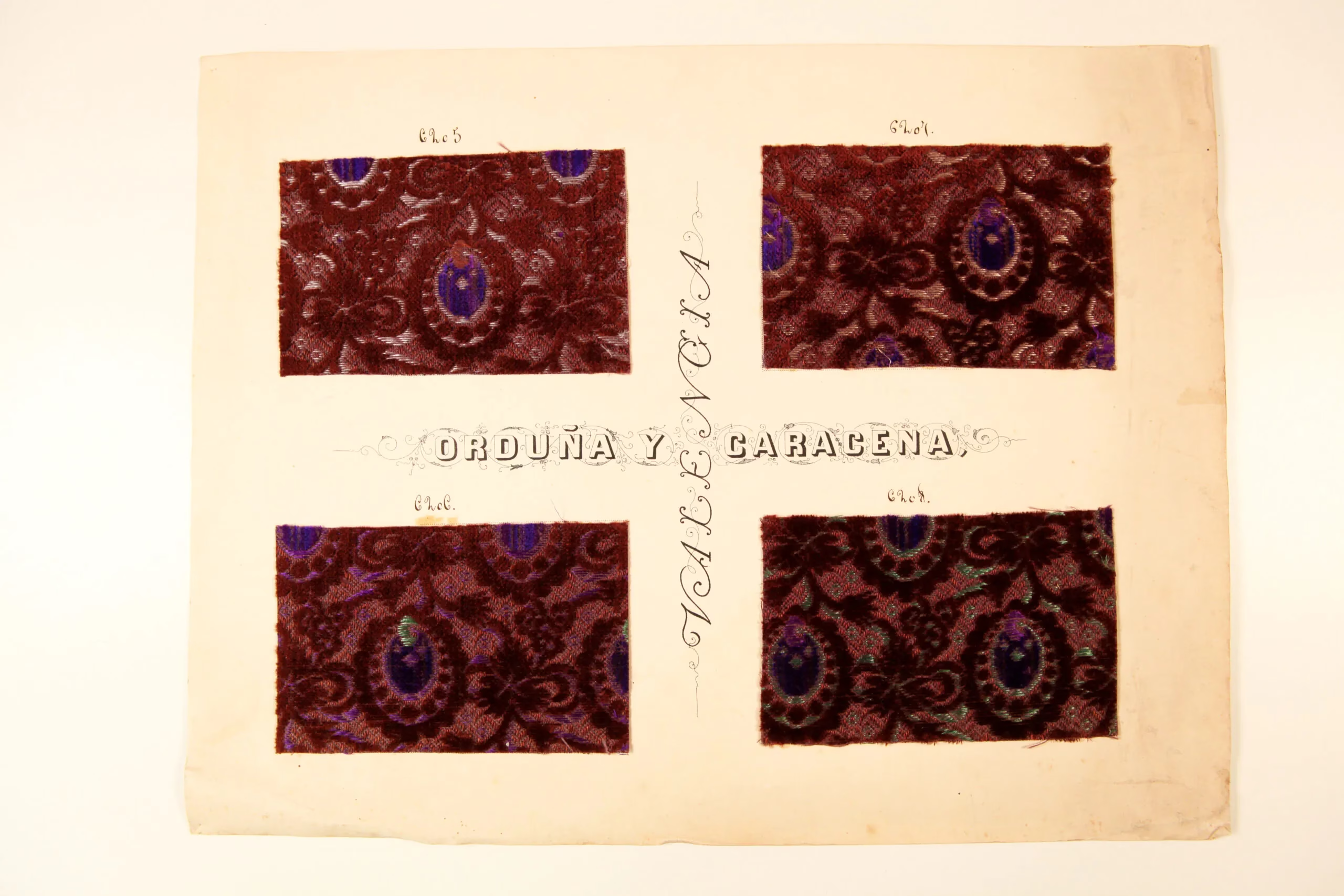
    Constitución de la compañía “Orduña y Caracena”, por Ángel Orduña y su primo Vicente Orduña Caracena

  • 1882
       

    1882 - 1882

    Constitución de la compañía “Viuda e hijos de Vicente Orduña” por Antonia Cebrián Genovés con sus hijos Ángel y Vicente Orduña Cebrián.

  • 1883
       

    1883 - 1883

    Constitución de la compañía “Cebrián y Orduña” por Ángel Orduña Cebrián con su suegro, Agustín Cebrián Genovés, y su cuñado, Miguel Cebrián Donday

  • 1900
       

    1900 - 1900

    Examen como maestro del CAMS de Ángel Orduña Cebrián (6ª generación)

  • 1932
       

    1932 - 1932

    Disolución de la compañía “Viuda e hijos de Vicente Orduña”

  • 1961
       

    1961 - 1961

    Los hermanos Vicente y Ángel Orduña Alberola (7ª generación) ponen en marcha la fábrica de tintes en Benetússer

  • 1962
       

    1962 - 1962

    Matrimonio de Mª Amparo Orduña Alberola (7ª generación) con Leoncio Julián Díaz. A continuación, marchan a Lima (Perú) para un proyecto de un año, que terminará en un largo periodo de 10 años, y… 5 hijos (8ª generación).

  • 1966
       

    1966 - 1966

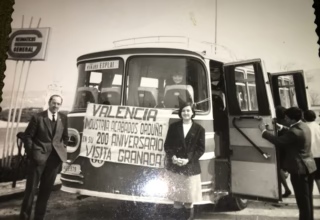
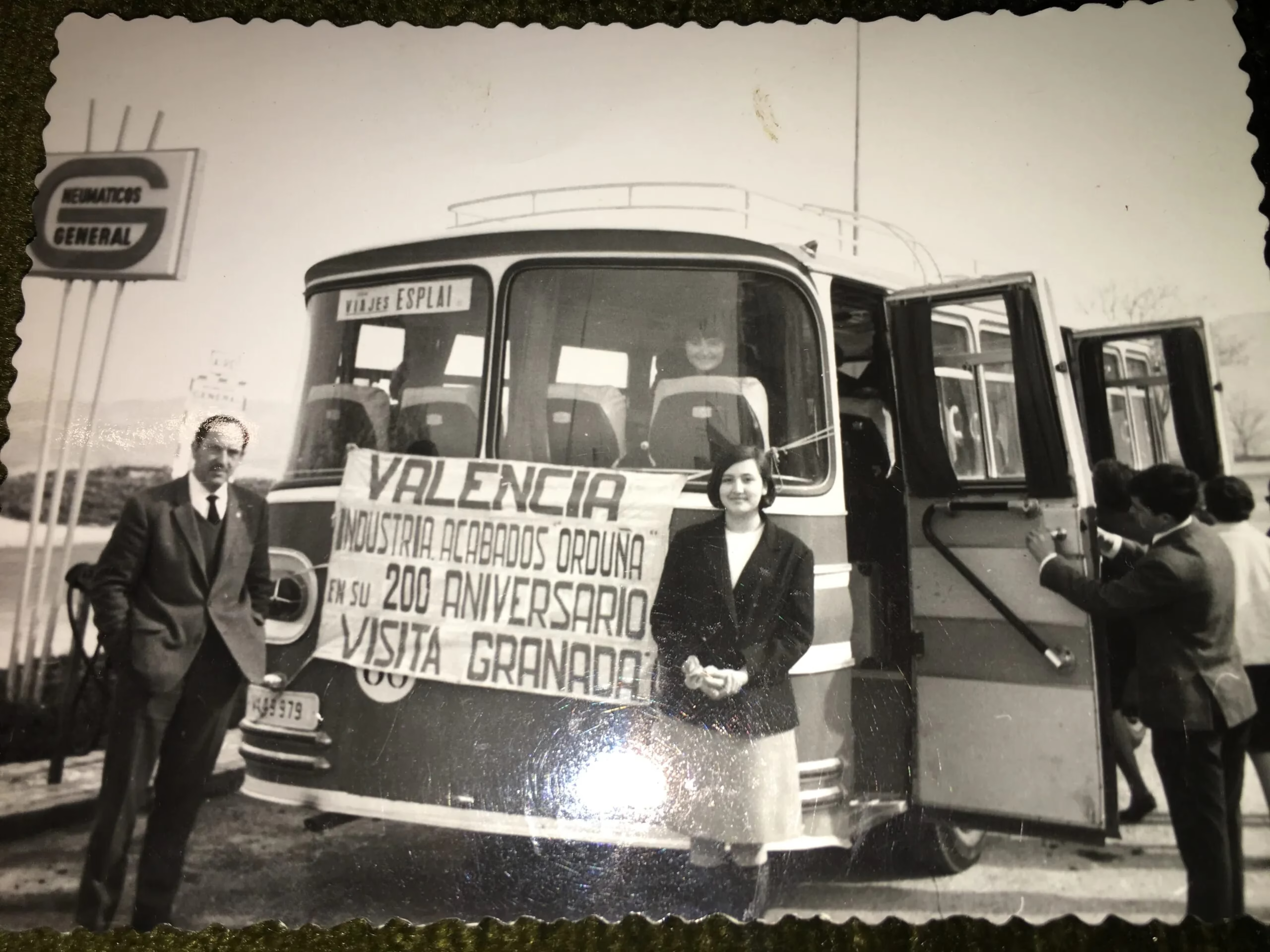
    Celebración del 200 aniversario (desde 1766, sin documentar)

  • 1967
       

    1967 - 1967

    Inscripción colegial de Ángel Orduña Alberola (7ª generación).

  • 1968
       

    1968 - 1968

    Inicio de la construcción de la industria de tintes y acabados en Bétera.

  • 1971
       

    1971 - 1971

    Traslado de la sección de tinte de Benetússer a Bétera. En Valencia se abrirá el despacho en la calle Padre Ferris, 38.

  • 1974
       

    1974 - 1974

    Leoncio y Mª Amparo compran la fábrica de Bétera a sus cuñados Vicente y Ángel Orduña Alberola. Plan de pagos a 4 años.

  • 1976
       

    1976 - 1976

    Venta y posterior derribo de la Casa de la calle En Bany

  • 1978
       

    1978 - 1978

    Se escritura la compra venta de la fábrica de Bétera, de los hermanos Vicente y Ángel Orduña Alberola, a su hermana Mª Amparo. Constitución de Acabados Textiles Orduña, S.A., con sede en Bétera.

  • 1990
       

    1990 - 1990

    Inscripción colegial de Gonzalo Julián Orduña (8ª generación)

  • 1998
       

    1998 - 1998

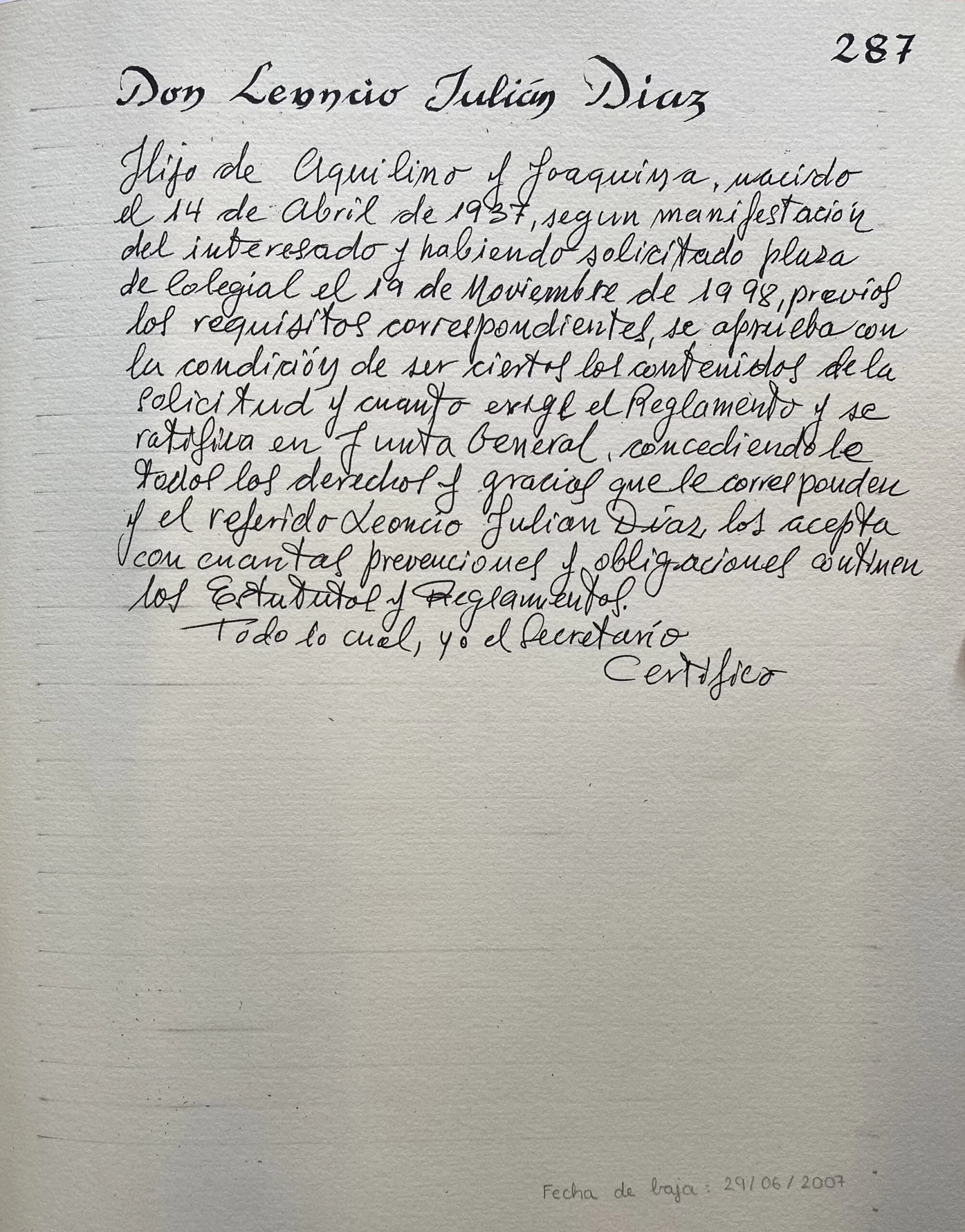
    Inscripción colegial de Leoncio Julián Díaz.

  • 2000
       

    2000 - 2000

    Los hermanos Ángel y Gonzalo J. O. compran a sus padres la fábrica de Bétera.

  • 2003
       

    2003 - 2003

    Ante la falta de trabajo y elevada estacionalidad en la planta de acabados textiles, con 3 turnos y 50 personas, Ángel y Gonzalo J. O. deciden crear una sociedad comercial para proveer de más kilos de tintura a la fábrica; nace Textil Batavia, SL. Inscripción colegial de Ángel Vicente Julián Orduña (8ª generación)

  • 2004
       

    2004 - 2004

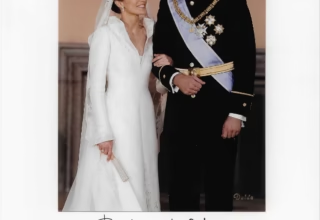
    La empresa Rafael Catalá nos encarga el acabado del tejido para el traje de novia de Dña Letizia Ortíz; inarrugable, antiestático e hidrófugo. Posteriormente los Orduña reciben el reconocimiento de los Príncipes de Asturias

  • 2006
       

    2006 - 2006

    Urbanización forzosa del area industrial del Pol. Ind. L`Horta Vella de Bétera.

  • 2007
       

    2007 - 2007

    Construcción de tres naves nuevas en Polígono Industrial L’Horta Vella, y automatización de la sección de tinte

  • 2010
       

    2010 - 2010

    Los hermanos Ángel y Gonzalo siguen diferentes caminos. El primero continuará en la sociedad fabril Acabados y Tintes Orduña, S.L.L., mientras Gonzalo seguirá con sociedad comercial Textil Batavia S.L.

  • 2011
       

    2011 - 2011

    Textil Batavia se especializa en el campo de los tejidos ignífugos.

  • 2015
       

    2015 - 2015

    Ángel Vicente Julián Orduña vende su participación en la sociedad laboral.

  • 2021
       

    2021 - 2021

    El Ayuntamiento de Bétera, en reconocimiento a los más de 50 años de presencia empresarial, le pone el apellido Orduña a la principal calle del Parque Empresarial L´Horta Vella.

  • 2022
       

    2022 - 2022

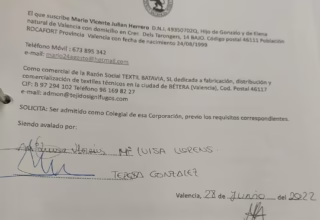
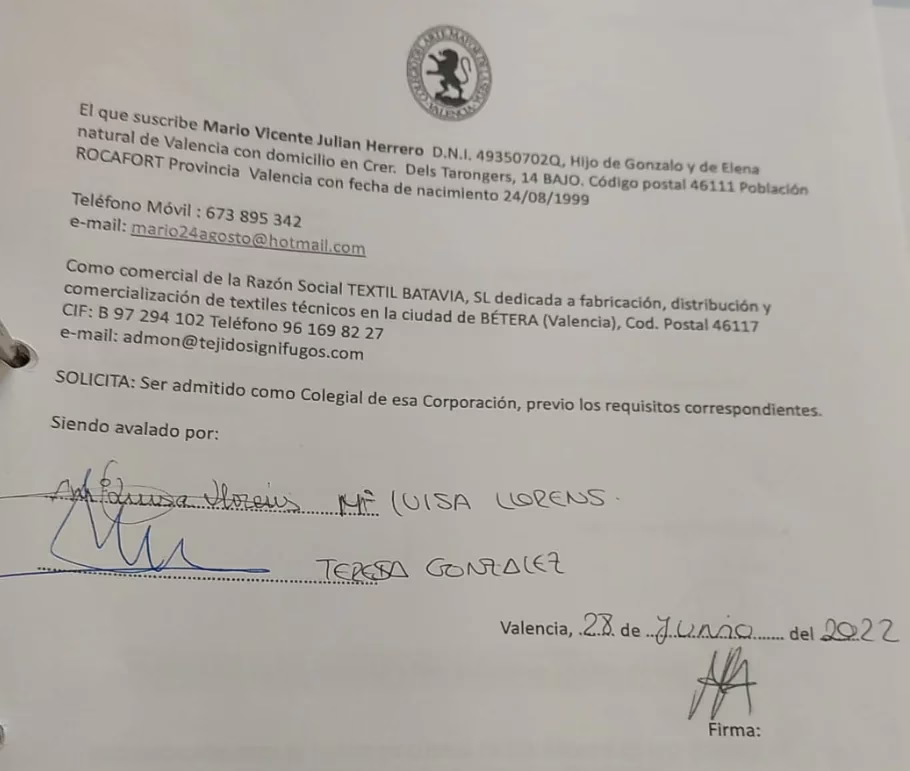
    Acabados Textiles Orduña, S.A. cierra una etapa al vender las naves y la maquinaria que desde el 2010 tenía alquiladas. Inscripción colegial de Mario Julián Herrero (9ª generación) Gonzalo J. O. es nombrado presidente del CAMS.

  • 2023
       

    2023 - 2023

    Adquisición y reforma de las actuales naves en el Pol. Ind. Moncada 2

  • 2024
       

    2024 - 2024

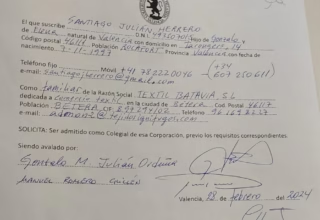
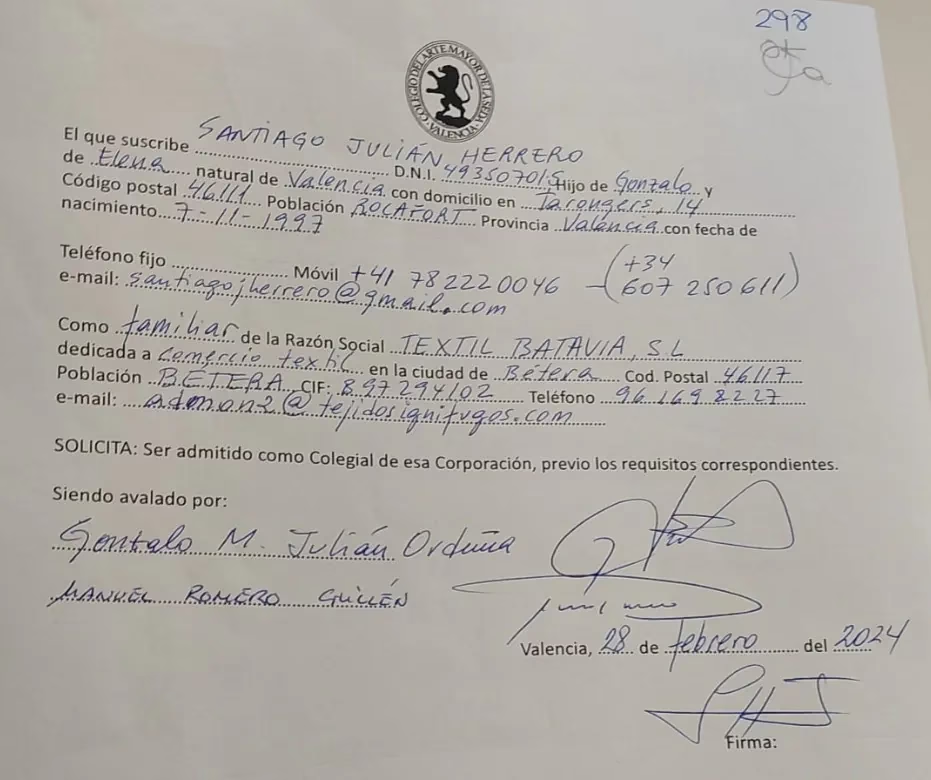
    Inscripción colegial de Santiago Julián Herrero (9ª generación) Manteniendo la razón social, la comercial cambia su denominación a ORDUÑA 1755, S.L. y su dirección social: Calle Regaliciar, 1, Polígono Industrial Moncada 2, de Moncada. Al tiempo que entra en el sector de los textiles técnicos náuticos al adquirir la sociedad Advanced Sails, S.L. sita en […]

  • 2025
       

    2025 - 2025

    Orduña 1755, SL, después de exponer en varias ediciones de Home textiles Premium, en Madrid y Valencia, participará del 3-6 de febrero por primera vez en la ISE Barcelona 2026 (feria internacional de sistemas audiovisuales y escenografía). Se organiza, para el 19 de diciembre de 2025, la celebración del 270 aniversario de tradición textil con […]

+ 270 años17461751175517661789180618341850185118541855185618741882188319001932196119621966196719681971197419761978199019982000200320042006200720102011201520212022202320242025

We are talking about 270 years of a family-owned textile company.

From spinning, through weaving, dyeing, and finishing, to our own and outsourced manufacturing and, of course, trade and distribution. Always linked to Valencia and its College of High Silk Art (hereinafter CAMS).

1746

Vicente Orduña Pérez (1st generation), with no prior ancestry in the Veluters (silk weavers) guild, begins his training as an apprentice silk weaver.

1751

Vicente Orduña Pérez reaches the rank of Journeyman and continues his training.

1755

Vicente Orduña Pérez acquires the rank of Master Damask Weaver and Master Silk Velvet Weaver. From this moment on, guild ordinances allow him to have his own workshop.

1766

Pending documentary accreditation, this is cited as the year of incorporation of the first commercial company of the Orduña family.

1789

Vicente Orduña Laques (2nd generation), like his father, acquires the mastership of Damask Weaver.

1806

Vicente Orduña Marqués (3rd generation) acquires the status of Master in the Brazo de Llano. Purchase of a silk fabric press.

1834

Purchase of the palace house-workshop of Mr. Joaquín Manuel Fos from his son Joaquín Fos Ferraro, located at 36 En Bany Street in the Velluters district.

1850

Purchase of the house on Triador Street, numbers 1, 2, and 3, in order to expand the silk fabric factory.

Participation of the company “Vicente Orduña e hijo” in the national exhibition of Spanish industrial products held in Madrid, where it was awarded a gold medal.

Commission to supply the velvet intended for upholstering the seats and curtains of the Congress of Deputies.

1851

Vicente Orduña Pérez (4th generation) acquires, along with his brothers, the status of Master.

Participation of the company “Vicente Orduña” in the first World’s Fair held in London, where it was awarded a medal in Section XIII, comprised of silk and velvet goods.

1854

Incorporation of the new company “Don Vicente Orduña e hijos”.

1855

Examination as Masters of the brothers Ricardo and Ángel Orduña Cebrián (5th generation).

1856

“Don Vicente Orduña e hijos” acquires the existing silk spinning mill in Quart de Poblet.

1874

Incorporation of the company “Orduña y Caracena” by Ángel Orduña and his cousin Vicente Orduña Caracena.

1882

Incorporation of the company “Viuda e hijos de Vicente Orduña” by Antonia Cebrián Genovés with her sons Ángel and Vicente Orduña Cebrián.

1883

Incorporation of the company “Cebrián y Orduña” by Ángel Orduña Cebrián with his father-in-law, Agustín Cebrián Genovés, and his brother-in-law, Miguel Cebrián Donday.

1900

Examination as a master of the CAMS by Ángel Orduña Cebrián (6th generation).

1932

Dissolution of the company “Viuda e hijos de Vicente Orduña”.

1961

Brothers Vicente and Ángel Orduña Alberola (7th generation) start up the dye factory in Benetússer.

1962

Marriage of Mª Amparo Orduña Alberola (7th generation) to Leoncio Julián Díaz. Subsequently, they leave for Lima (Peru) for a one-year project, which would end in a long period of 10 years, and… 5 children (8th generation).

1966

Celebration of the 200th anniversary (since 1766, undocumented).

1967

Collegiate registration of Ángel Orduña Alberola (7th generation).

1968

Start of construction of the dyeing and finishing industry in Bétera.

1971

Relocation of the dyeing section from Benetússer to Bétera. The office in Valencia will open at 38 Padre Ferris Street.

1974

Leoncio and Mª Amparo purchase the Bétera factory from their brothers-in-law Vicente and Ángel Orduña Alberola. 4-year payment plan.

1976

Sale and subsequent demolition of the house on En Bany Street.

1978

The sale of the Bétera factory from the brothers Vicente and Ángel Orduña Alberola to their sister Mª Amparo is deeded. Incorporation of Acabados Textiles Orduña, S.A., based in Bétera.

1990

Collegiate registration of Gonzalo Julián Orduña (8th generation).

1998

Collegiate registration of Leoncio Julián Díaz.

2000

Brothers Ángel and Gonzalo J. O. purchase the Bétera factory from their parents.

2003

Faced with a lack of work and high seasonality at the textile finishing plant, with 3 shifts and 50 people, Ángel and Gonzalo J. O. decide to create a commercial company to provide more kilograms of dyeing to the factory; Textil Batavia, SL is born.

Collegiate registration of Ángel Vicente Julián Orduña (8th generation).

2004

The company Rafael Catalá commissions us to finish the fabric for the wedding dress of Ms. Letizia Ortíz; wrinkle-resistant, anti-static, and water-repellent. Subsequently, the Orduñas receive recognition from the Prince and Princess of Asturias.

2006

Compulsory urbanization of the industrial area of the L’Horta Vella Industrial Estate in Bétera.

2007

Construction of three new warehouses in the L’Horta Vella Industrial Estate and automation of the dyeing section.

2010

Brothers Ángel and Gonzalo follow different paths. The former will continue in the manufacturing company Acabados y Tintes Orduña, S.L.L., while Gonzalo will continue with the commercial company Textil Batavia S.L.

2011

Textil Batavia specializes in the field of fireproof fabrics.

2015

Ángel Vicente Julián Orduña sells his stake in the labor company.

2021

The Bétera City Council, in recognition of more than 50 years of business presence, names the main street of the L’Horta Vella Business Park after Orduña.

2022

Acabados Textiles Orduña, S.A. closes a chapter by selling the warehouses and machinery it had leased since 2010.

Collegiate registration of Mario Julián Herrero (9th generation).

Gonzalo J. O. is appointed president of the CAMS.

2023

Acquisition and renovation of the current warehouses in the Moncada 2 Industrial Estate.

2024

Collegiate registration of Santiago Julián Herrero (9th generation).

Maintaining the corporate name, the commercial company changes its name to ORDUÑA 1755, S.L. and its registered office to: Calle Regaliciar, 1, Polígono Industrial Moncada 2, Moncada. At the same time, it enters the technical nautical textiles sector by acquiring the company Advanced Sails, S.L. located at the Real Club Náutico de Valencia.

2025

Orduña 1755, SL, after exhibiting at several editions of Home Textiles Premium in Madrid and Valencia, will participate for the first time from February 3-6 in ISE Barcelona 2026 (international trade fair for audiovisual systems and scenography).

The celebration of the 270th anniversary of textile tradition is organized for December 19, 2025, with the presentation of the book, ORDUÑA 1755.

Shopping Cart (0 items)